

How Personalized Gifts Are Made: Techniques and Process
Personalized gifts are custom-made items built from buyer-provided details, transformed into a finished product through a structured production process that combines precise data capture, digital proofing, and specialized crafting techniques. Understanding how personalized gifts are made reveals why they carry more emotional weight than off-the-shelf options. The process spans three core stages: collecting exact customer input, creating a digital proof for approval, and applying the right personalization method, whether that is laser engraving, UV printing, or hand-painting. Each stage has quality controls that prevent errors and protect the meaning behind the gift.
What methods and techniques are used to personalize gifts?
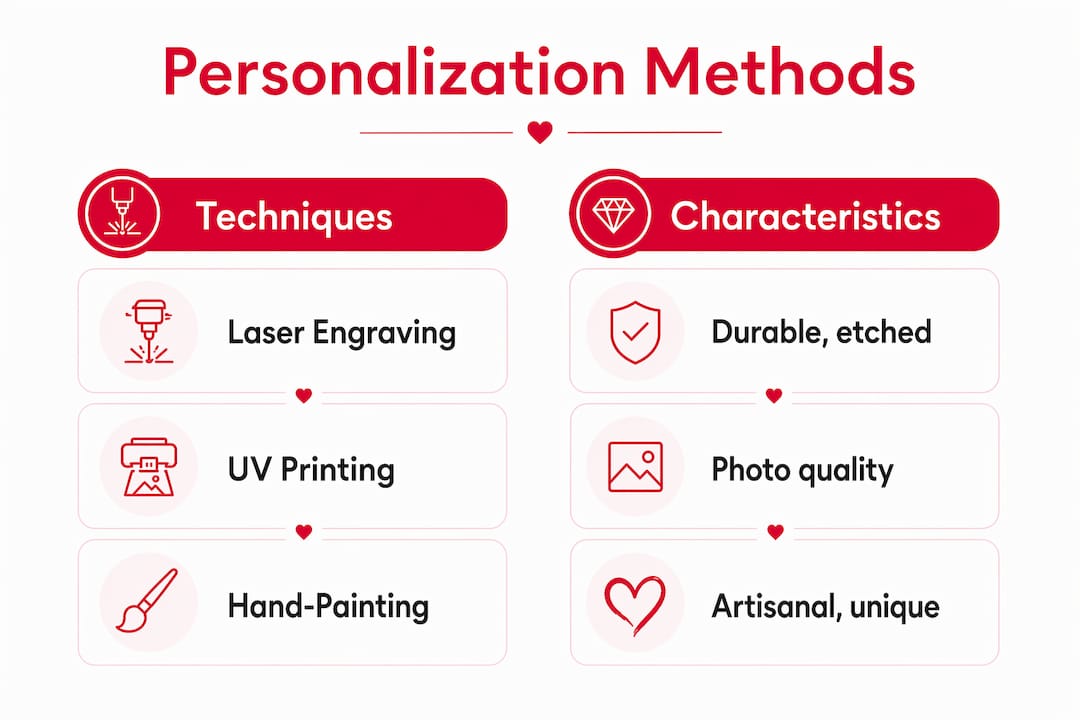
Custom gift production relies on three primary techniques. Each suits different materials, budgets, and visual outcomes. Choosing the wrong method for a material is the most common reason personalized gifts look cheap or fade quickly.
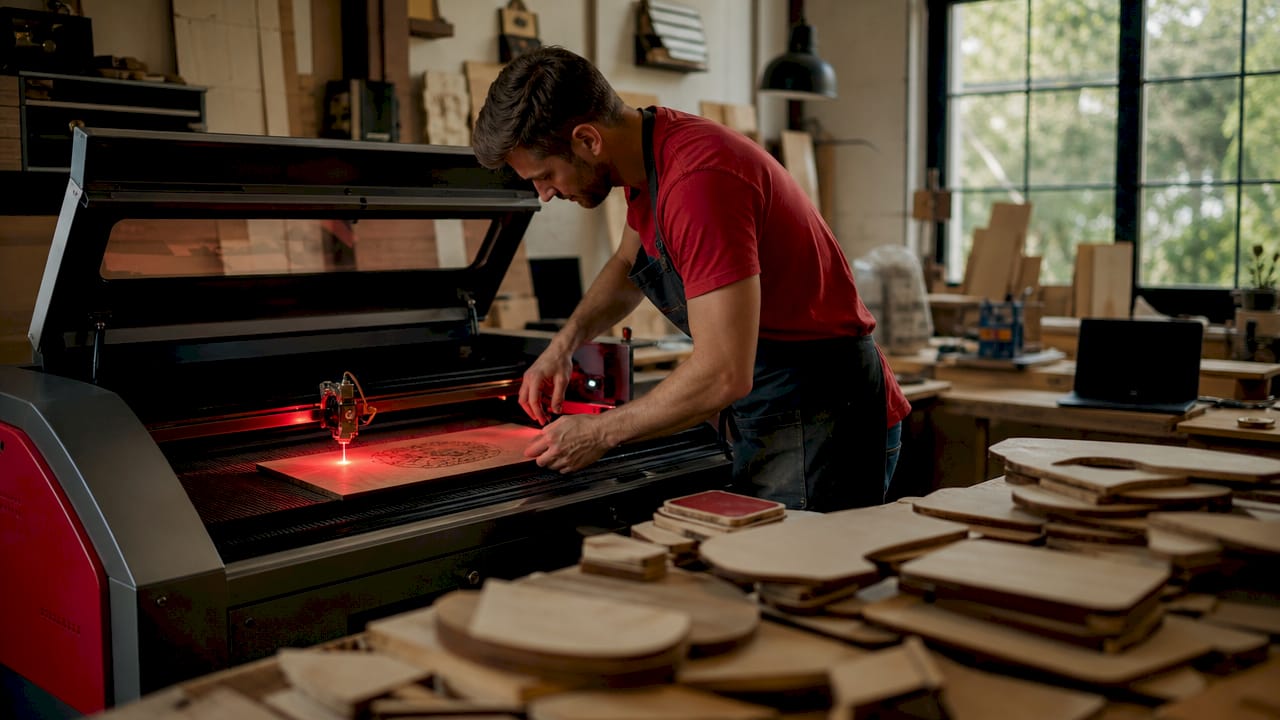
Laser engraving permanently etches a design into the surface of a material by burning away a thin layer. It works best on metals, wood, leather, and acrylic. The result is tactile and monochromatic. UV printing vs. laser engraving shows that laser engraving produces precise, durable marks that will not peel or fade, making it the go-to choice for keepsakes meant to last decades.
UV printing deposits full-color ink directly onto a surface and cures it instantly with ultraviolet light. The output is photo-quality, with rich color gradients and sharp detail. UV printing works on almost any flat surface, including glass, ceramic, and acrylic. The tradeoff is that the ink sits on top of the material rather than into it, so it can chip on items that take heavy daily use.
Hand-painting is the most artisanal of the three methods. A skilled artist applies paint or ink by hand, making each piece genuinely one of a kind. Precious Moments, which specializes in hand-painted keepsakes, treats this process as a form of fine art rather than manufacturing. The emotional value is high, but the production time is longer than automated methods.
| Technique | Best materials | Output style | Durability |
|---|---|---|---|
| Laser engraving | Metal, wood, acrylic, leather | Monochromatic, tactile | Very high |
| UV printing | Glass, ceramic, acrylic, plastic | Full color, photo-quality | Moderate to high |
| Hand-painting | Ceramic, resin, fabric, wood | Artisan, unique | Varies by paint type |
Pro Tip: Match the technique to the gift’s daily use. A keychain needs laser engraving. A photo-printed mug needs UV printing. A commemorative figurine deserves hand-painting.
How does the production workflow ensure accuracy?
The production workflow for custom gifts is where most errors either get caught or get baked in permanently. A structured process is the difference between a gift that delights and one that disappoints.
The workflow follows these steps at reputable producers:
- Input collection. The maker collects the buyer’s exact text, images, and specifications. Buyer text must be copied exactly as submitted, without auto-correction, because stylized spellings and unconventional capitalization are often intentional.
- Input validation. Before any file goes to production, the system or a human checks that text fits within character limits, images meet resolution requirements, and placement coordinates are correct. Input validation before production is the single biggest lever for reducing errors and costly rework.
- Digital proof creation. A mockup showing exactly how the finished gift will look is sent to the customer. Stampare Productions offers free digital mockups within 24 hours, and their data shows that proof approval eliminates 98% of personalization errors.
- Customer approval. Production does not start until the customer signs off on the proof. This step is non-negotiable at quality-focused producers.
- Production routing. The approved file routes to the correct station, whether that is a laser engraver, UV printer, or a hand-painting artist. Larger operations use smart routing and automated file generation to match orders to the right equipment and reduce bottlenecks.
- Quality inspection. The finished item is checked against the approved proof before packaging.
Pro Tip: When you receive a proof, zoom in to 100% and read every character out loud. Catching a typo at the proof stage costs nothing. Catching it after production costs the entire order.
What are the typical timelines for personalized gift production?
Timelines for creating custom gifts vary by method, but every order has two distinct time blocks that customers often confuse: proof approval time and manufacturing time. Separating these two lead times is the key to realistic scheduling and on-time delivery.
| Stage | Typical timeframe | Notes |
|---|---|---|
| Proof creation | Within 24 hours | Faster for text-only orders |
| Customer approval | Customer-dependent | Delays here push all downstream dates |
| Production (automated) | 3–5 business days | Laser engraving, UV printing |
| Production (hand-painted) | 4–6 extra business days | Per Precious Moments’ standard lead time |
| Shipping | Varies by carrier | Add buffer for peak seasons |
The most common reason a personalized gift misses a birthday or anniversary is a slow proof approval, not slow production. Fast production capacity means nothing if the customer takes three days to review the mockup. Approval delays cause missed deadlines even when the maker can turn around production in 24 hours.
For hand-painted gifts, Precious Moments requests 4–6 extra business days beyond standard production time. That extra time reflects the routing to a specialized artist and the quality control required for fine art work.
Plan backward from your delivery deadline. Subtract shipping time, then production time, then approval time, then proof creation time. Whatever date you land on is your order deadline.
What tips help you get the best results from personalized gifts?
Getting a great result from a custom gift depends as much on what you submit as on what the maker does with it.
- Provide production-ready artwork. Many vendors do not design from scratch. Submit your final text exactly as you want it printed, and supply images at the highest resolution you have. A blurry photo produces a blurry print, regardless of the printing method.
- Respect character limits. Every personalization field has a maximum character count tied to the physical space on the product. Exceeding it forces the maker to shrink text until it becomes unreadable, or to ask you to revise.
- Specify your font and style preferences upfront. If you have a preferred font or color, say so at the order stage. Changing it after the proof is created adds a revision cycle and delays your order.
- Review the proof the same day you receive it. Proof approval is the single step entirely in your hands. A same-day response keeps your production on schedule.
- Choose materials that match the occasion. A custom photo flip book made from wood and printed photos holds up as a display piece. A ceramic mug with UV printing is practical but not a display keepsake. Match the material to how the recipient will use the gift.
Pro Tip: If you are ordering for a holiday, place your order at least two weeks before the date. That buffer covers proof revisions, production, and shipping without stress.
Key Takeaways
Personalized gifts succeed when exact customer input, fast proof approval, and the right production technique are combined without shortcuts.
| Point | Details |
|---|---|
| Three core techniques | Laser engraving, UV printing, and hand-painting each suit different materials and durability needs. |
| Proof approval is critical | Digital mockups eliminate 98% of errors; never skip the approval step. |
| Two separate lead times | Proof approval time and manufacturing time are distinct. Plan for both. |
| Submit exact input | Copy text exactly as intended. Auto-correction causes disputes and rework. |
| Match method to material | The technique must fit the gift’s material and the recipient’s intended use. |
The part of personalized gift-making most people overlook
I have spent years watching people obsess over what to personalize and almost no time thinking about how the personalization actually gets made. That gap is where most disappointments happen.
The proof step is the most underrated part of the entire process. Customers treat it like a formality. Makers treat it like a contract. Both are right, but for different reasons. When you approve a proof, you are signing off on every character, every pixel placement, and every color choice. The maker’s obligation ends there. Your obligation to read it carefully begins the moment it lands in your inbox.
The balance between automation and craftsmanship is also more nuanced than it looks. Automated methods like laser engraving and UV printing are faster and more consistent. Hand-painting is slower and variable, but that variability is the point. No two hand-painted pieces are identical. For a gift meant to mark a singular moment, that uniqueness carries real weight. A handmade crocheted ornament or a hand-painted figurine communicates effort in a way a machine-printed item simply cannot.
Technology is scaling personalization in ways that were impossible five years ago. Smart routing, automated file validation, and AI-assisted production queues mean a small maker can now handle hundreds of custom orders without sacrificing accuracy. The emotional impact of the gift does not come from the technology. It comes from the specificity of the detail the buyer chose to include.
— Aiden
Personalized gifts worth giving from Radioactivelove
Radioactivelove builds gifts around emotional connections, not generic sentiment. Their range includes both handcrafted pieces and products that use photo-based personalization to turn a memory into something you can hold.
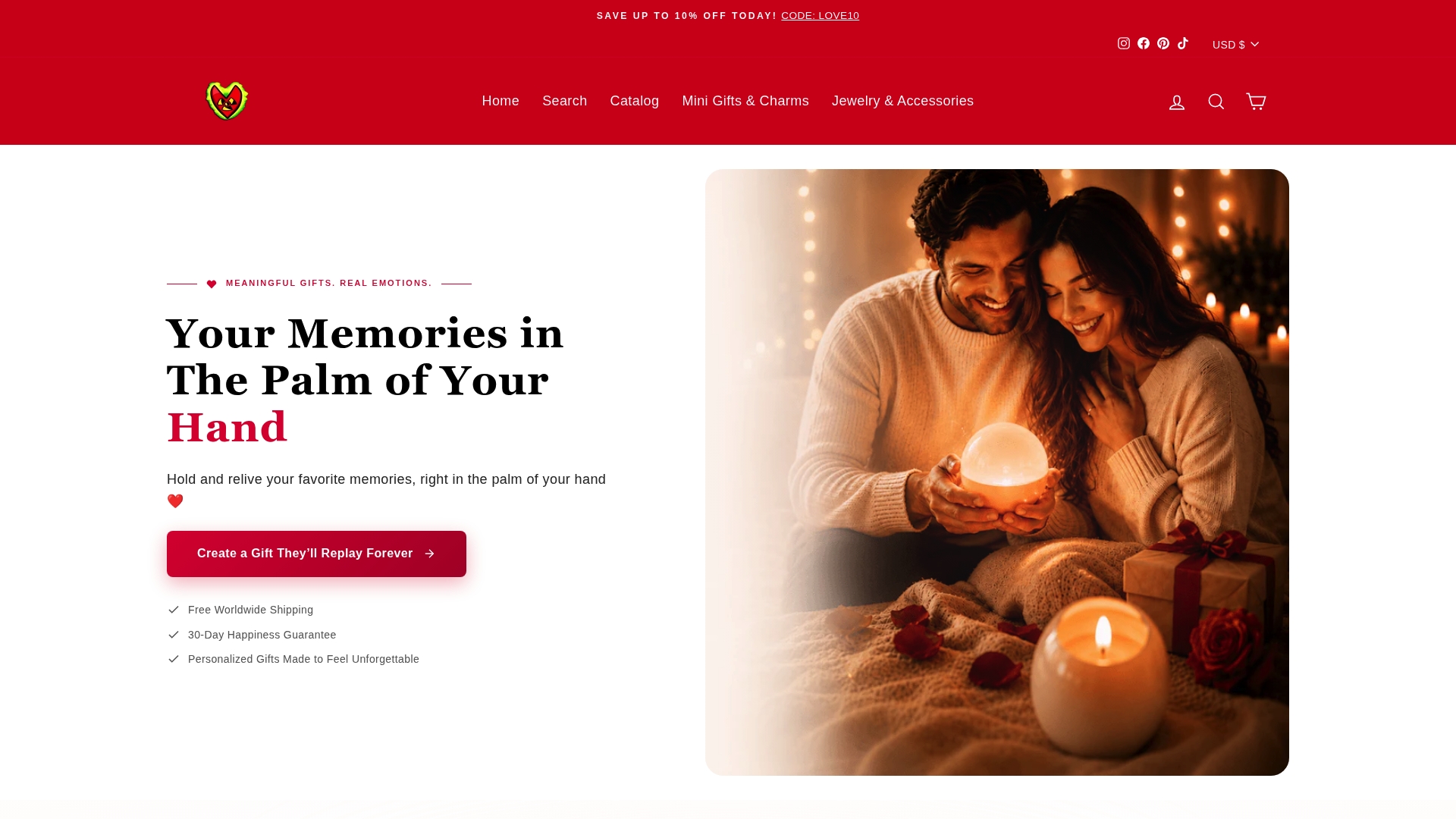
The 3D Crystal Ball Video Player encapsulates video memories inside a physical object, combining digital personalization with a keepsake format that no standard gift can replicate. For something handcrafted, the custom photo flip book turns your photos into a hand-cranked wooden memory box with built-in light. Both products reflect the same principle: the best personalized gifts carry a specific memory, not just a name.
FAQ
What is the first step in making a personalized gift?
The first step is collecting the buyer’s exact input, including text, images, and placement preferences. No production begins until this information is validated and confirmed.
How long does it take to make a personalized gift?
Proof creation typically takes 24 hours. Production runs 3–5 business days for automated methods and adds 4–6 extra business days for hand-painted items. Shipping time is separate.
Why is the proof approval step so important?
Proof approval eliminates the vast majority of personalization errors before production starts. Skipping or rushing this step is the leading cause of incorrect finished gifts.
What is the difference between UV printing and laser engraving?
UV printing produces full-color, photo-quality graphics on almost any flat surface. Laser engraving permanently etches a monochromatic design into the material for a tactile, long-lasting result.
Can I change my personalization after approving the proof?
Most makers do not allow changes after proof approval, because production begins immediately. Review the proof carefully before signing off, since revisions after that point typically require a new order.