

How to choose a meaningful gift for any occasion
A meaningful gift is defined as any item or experience chosen specifically to reflect the recipient’s personality, shared history, or current emotional needs. Generic gifts fail not because of price, but because they signal low attention. The most effective approach to thoughtful gifting combines a physical anchor, such as an object the recipient can keep, with a personal message or shared memory that makes the gift irreplaceable. Gift-giving is an expression of relationship investment, not a routine obligation. When you choose a meaningful gift for any occasion using this framework, you shift from shopping to storytelling.
How to choose a meaningful gift for any occasion: start with the recipient
The single biggest mistake in gift selection is starting with the occasion rather than the person. A birthday, anniversary, or holiday only tells you when to give. It tells you nothing about what will resonate.
Gifts should focus on the recipient’s life stage and relationship context rather than only on the occasion. A new parent has different emotional needs than a recently retired colleague, even if both are celebrating a birthday. Matching the gift to where someone is in life, not just what day it is, separates thoughtful presents from forgettable ones.
Most recipients fall into one of four broad personality types when it comes to gifting:
- The practical type values function over form. They appreciate gifts they will actually use: quality kitchen tools, a well-chosen book, or a subscription to a service they already pay for themselves.
- The sentimental type treasures emotional connection above all. Photo albums, custom jewellery, and handwritten letters land deeply with this person.
- The experience-seeker collects memories, not things. Concert tickets, cooking classes, or a weekend trip resonate far more than any object.
- The homebody values comfort and personal space. Cosy gifts like a handmade crocheted ornament, a quality candle set, or a curated self-care kit feel genuinely thoughtful.
Identifying the type takes observation, not guesswork. Pay attention to how the person decorates their home, what they talk about wanting, and what they spend their own money on.
Pro Tip: Keep a running “Gift Idea List” on your phone. Every time a friend mentions something they love, want, or need in casual conversation, add it. Tracking these mentions turns gift shopping from a stressful search into a simple retrieval.

What is the specificity test, and how does it improve personalization?
The Specificity Test is a simple filter: ask whether the gift could have been bought for anyone, or whether it could only have been bought for this person. If the answer is “anyone,” the gift needs more personalization.
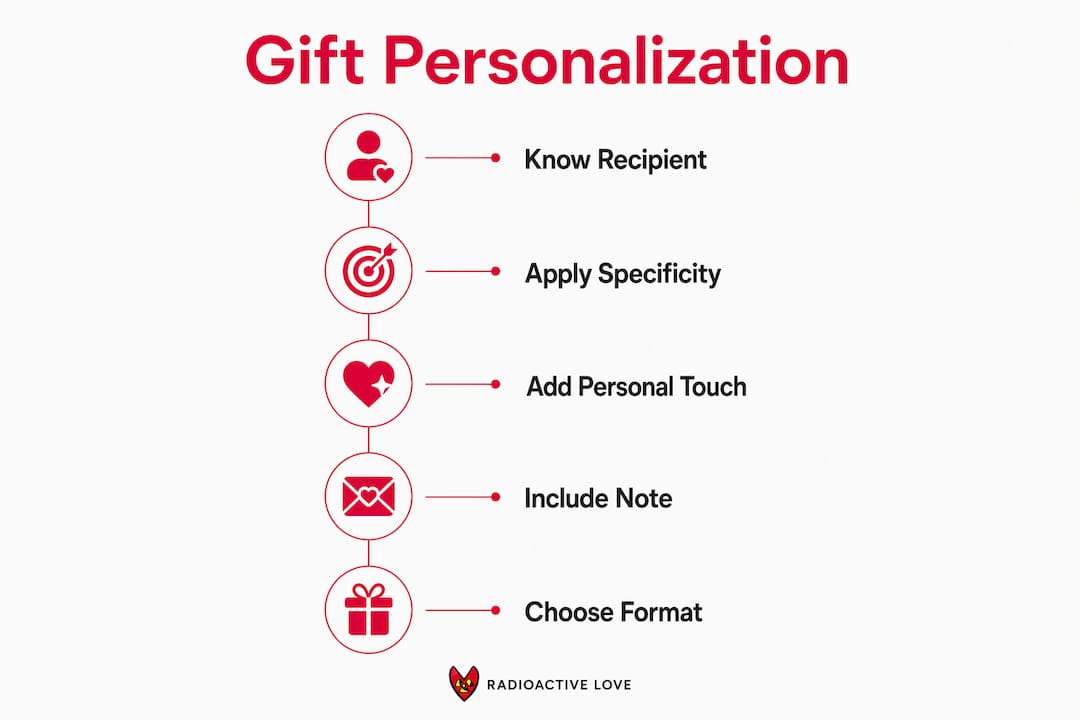
Applying the Specificity Test by adding personalized elements like shared memories or inside jokes dramatically increases emotional gift value. A plain leather journal is a decent gift. A leather journal embossed with the recipient’s initials and tucked inside with a handwritten note referencing a trip you took together is a meaningful one. The object is nearly identical. The emotional weight is not.
Common personalization methods that reliably elevate a gift include:
- Engraving or embossing: Names, dates, and short phrases turn standard items into keepsakes. Design experts confirm that adding a recipient’s name or a significant date transforms a standard gift into a treasured heirloom.
- Embroidery: Monogrammed towels, robes, or tote bags feel considered and personal.
- Custom messaging: A printed photo book with captions, or a video message embedded in a keepsake, adds a layer of storytelling no generic gift can replicate.
- Shared memory anchors: Reference a specific moment, trip, or joke the two of you share. This signals that you were paying attention.
For common occasions, personalization looks like this: for a wedding, a custom photo flip book capturing the couple’s relationship timeline; for a graduation, an engraved watch with the graduation year; for a holiday, a preserved flower arrangement with a handwritten card referencing something specific about the year you shared.
Pro Tip: Always include a handwritten note, even with a highly personalized gift. The note adds a second layer of meaning and gives the recipient something to re-read long after the gift itself has been unwrapped.
Physical gifts, experiential gifts, or hybrid: which format works best?
The format of a gift matters as much as its content. Physical gifts, experiential gifts, and hybrid combinations each serve different recipients and occasions.
Physical gifts work best as lasting keepsakes. They occupy space in the recipient’s home or life and serve as daily reminders of the relationship. A jewellery gift box or a custom photo animation frame delivers this kind of ongoing emotional presence. The object becomes a symbol of the moment it was given.
Experiential gifts create stronger memories, particularly for experience-seekers and minimalists. Experiential and service-based gifts are ideal for recipients who prefer utility and memories over possessions. A cooking class, a spa day, or tickets to a live event give the recipient a story to tell rather than an item to store.
Hybrid gifts combine both formats and consistently outperform either alone. Personalized items, experiential gifts, and group-assembled video tributes statistically outperform standard registry items in emotional impact, regardless of price. A group video tribute with 40 contributors rates higher emotionally than expensive material gifts. That finding matters: effort and personalisation beat cost every time.
| Gift format | Best for | Occasion examples |
|---|---|---|
| Physical keepsake | Sentimental types, long-distance couples | Anniversaries, Valentine’s Day, long-distance milestones |
| Experiential | Experience-seekers, minimalists | Birthdays, retirements, graduations |
| Hybrid (physical + experience) | Most recipients | Weddings, milestone birthdays, holidays |
| Service-based | Practical types, busy parents | New baby, moving day, post-surgery recovery |
When organising group gifts like video tributes, set submission deadlines 7 days before the event to account for delays. Deadline discipline directly improves the final quality and delivery timing of the gift.
How do you give a meaningful last-minute gift?
Last-minute gifting does not have to mean low-quality gifting. The key is to avoid the generic fallback: a gift card to a major retailer with no personal context. That signals effort was not made.
Last-minute gifting experts recommend avoiding generic options and opting instead for curated digital vouchers, instant subscriptions, or service-based credits. Service-based gifts maintain high satisfaction even when purchased close to the event date. The reason is simple: the recipient experiences the gift as a considered choice, not a rushed one.
Practical last-minute options that maintain emotional weight include:
- A digital subscription to a streaming service, audiobook platform, or online course the recipient has mentioned wanting
- A service credit for a platform like Taskrabbit, covering a task the recipient genuinely needs done
- A curated digital gift card to a specific shop the recipient loves, paired with a voice message or video explaining why you chose it
- An instant booking for an experience: a restaurant reservation, a class, or a guided tour
The personality-type framework still applies under time pressure. An experience-seeker will respond better to a restaurant booking than a practical type, who would prefer a useful service credit. Knowing the recipient type means you can make a fast decision that still feels personal.
Common gifting mistakes and how to avoid them
The most common gifting mistake is buying for the occasion rather than the person. An occasion tells you the deadline. The recipient tells you the gift.
A close second is giving physical gifts to people who actively dislike clutter. For recipients who prefer minimalism, experiential or service gifts provide memories and utility without adding physical items to their space. Giving a homebody type a large decorative item they did not ask for creates a burden, not a memory.
Overspending is another trap. Price does not equal meaning. Meaningful gifts acknowledge the past relationship and look forward to its continuation. A $30 gift that references a shared memory outperforms a $200 gift chosen because it seemed impressive.
- Avoid occasion-first thinking. Start with the person, then match the gift to the occasion.
- Match the format to the recipient. Do not give physical items to minimalists or experiences to homebodies who prefer comfort at home.
- Set a budget before you shop. Decide the amount first, then find the best gift within it. This prevents obligation spending.
- Skip the “safe” gift. A generic candle or wine bottle signals low effort. A specific candle in the recipient’s favourite scent, with a note explaining why you chose it, signals the opposite.
- Do not skip the presentation. Wrapping, a card, and a handwritten note add perceived value without adding cost.
Pro Tip: Quality and thoughtfulness are not the same thing. A handmade or carefully selected mid-range gift with a personal note consistently outperforms an expensive but impersonal one. Spend your attention before you spend your money.
Key takeaways
Meaningful gifts succeed because they reflect the recipient’s personality and life stage, not just the occasion or the price tag.
| Point | Details |
|---|---|
| Start with the person, not the occasion | Identify the recipient’s personality type and current life stage before selecting any gift. |
| Apply the Specificity Test | Ask whether the gift could only have been chosen for this person; if not, add a personal element. |
| Match format to recipient | Use physical keepsakes for sentimental types, experiential gifts for experience-seekers, and hybrids for most occasions. |
| Last-minute gifts can still be meaningful | Curated digital vouchers, service credits, and instant bookings maintain emotional impact under time pressure. |
| Effort outperforms price | A personalised mid-range gift with a handwritten note consistently rates higher emotionally than an expensive generic one. |
Why I think most people overthink gift-giving
People treat gift-giving as a performance. They worry about whether the gift looks impressive, whether it matches the occasion, and whether the price signals the right level of care. That framing is backwards.
The gifts I remember giving that landed best were never the most expensive ones. They were the ones where I had clearly been paying attention. A friend once mentioned offhandedly that she had been wanting to learn bookbinding. Three months later, I gave her a beginner bookbinding kit with a note referencing that exact conversation. She still talks about it. The kit cost less than $50.
What I have observed over years of watching people give and receive gifts is that the emotional hit comes from recognition. The recipient feels seen. That feeling does not come from a price tag. It comes from specificity, from the sense that someone was listening when they did not know they were being listened to.
The hardest part of meaningful gifting is also the simplest: pay attention. Keep notes. Revisit them before occasions. The custom photo flip book I gave my partner last year worked not because it was elaborate, but because every photo in it was chosen deliberately. That deliberateness is what people feel when they open something truly personal.
Tradition matters too, but only when it fits the person. Some recipients love the ritual of a classic gift format. Others find it impersonal. The skill is knowing which is which, and that only comes from paying attention over time.
— Aiden
Gifts from Radioactivelove that leave a lasting impression
Radioactivelove specialises in gifts that combine physical beauty with deep personalisation. Their 3D Crystal Ball Video Player encapsulates a cherished video memory inside a glass ball, making it one of the most distinctive keepsake gifts available for birthdays, weddings, anniversaries, and long-distance relationships. The gift works precisely because it is a hybrid: a physical object that plays a personal experience. Radioactivelove also offers a hand-cranked custom photo flip book, handmade crocheted ornaments, preserved flower arrangements, and a full range of personalised couple gifts. Every product is designed to carry emotional weight, not just aesthetic appeal.
FAQ
What makes a gift truly meaningful?
A meaningful gift reflects the recipient’s personality, shared history, or current emotional needs. Effective gifts acknowledge the past relationship and signal a commitment to its continuation.
How do I personalise a gift on a tight budget?
Personalisation does not require a large budget. Adding a handwritten note, referencing a shared memory, or choosing an item tied to a specific interest the recipient has mentioned costs little but dramatically increases emotional impact.
Are experiential gifts better than physical ones?
Neither format is universally better. Experiential gifts work best for experience-seekers and minimalists, while physical keepsakes suit sentimental recipients who value tangible reminders of relationships.
What should I do when I need a gift at the last minute?
Choose a curated digital voucher, an instant service booking, or a subscription to something the recipient has mentioned wanting. Pair it with a personal voice message or note to maintain emotional connection despite the time constraint.
How do I avoid giving a gift the recipient will not appreciate?
Match the gift format to the recipient’s personality type. Avoid physical items for minimalists, avoid generic options for sentimental types, and always apply the Specificity Test: if the gift could have been bought for anyone, it needs a personal element added.