

Why romantic gifts create lasting memories
Romantic gifts create lasting memories by triggering emotional intensity during both the giving and receiving experience, not simply at the moment of unwrapping. Research in behavioural science confirms that the feelings a gift generates over time matter far more than its price tag. Psychologists call this the “experiential soul” of a gift: the capacity of an object or gesture to produce repeated emotional moments that deepen relational bonds. Understanding why romantic gifts create lasting memories gives couples a real advantage in choosing gestures that genuinely strengthen their connection, rather than ones that impress briefly and fade.
Why romantic gifts create lasting memories through emotional experience
The strongest predictor of a gift’s lasting impact is the emotional intensity it produces during use, not during unwrapping. A 2017 study of 1,788 participants found that relationship strengthening comes from feelings experienced while consuming a gift, not from the initial excitement of receiving it. That finding reframes the entire logic of romantic gifting.
“Experiential gifts uniquely elicit stronger emotions during consumption, creating social bonds that outlast the gift moment.”
This means a gift that becomes part of a couple’s daily ritual, a warm crystal night light that fills a bedroom with soft colour, or a preserved flower box that sits on a desk for months, does more relational work than an expensive item admired once and shelved. The emotional return comes from repeated contact, not from novelty.
Psychologists describe this quality as the “experiential soul” of a material gift. An object carries an experiential soul when it reliably triggers positive feelings each time it is used. A photo album, a piece of jewellery worn daily, or a personalised keepsake all qualify. The key is that the gift must invite emotional engagement beyond the moment it is opened.
Pro Tip: When choosing a romantic gift, ask yourself: “Will this create a feeling every time they see or use it?” If the answer is yes, the gift has experiential soul and will build memories over time.
Does spending more make a romantic gift more meaningful?
Spending more money on a romantic gift does not increase the recipient’s gratitude or deepen the emotional bond. Research by Flynn and Adams on price delusion in gift spending shows that higher spending mostly benefits the giver’s peace of mind, not the recipient’s experience. That gap between giver and recipient perception is significant.
Behavioural scientists call this the “gift gap.” Givers consistently overestimate the importance of price and underestimate how much recipients value thoughtfulness and personalisation. Recipients are also more forgiving of gift quality than givers expect. They read a gift primarily as a signal of attention and investment, not as a measure of financial commitment.
A february 2026 survey reinforces this: 87% of people believe inexpensive gifts can be just as meaningful as expensive ones. That figure reflects a broad cultural shift toward valuing intention over expenditure. The emotional value of gifts comes from what they communicate, not what they cost.
Practical choices for affordable, memorable romantic gifts include:
- A handwritten letter paired with a small personalised object, such as matching couple rings that carry shared symbolism
- A gift that references a specific shared memory, such as a custom photo flip book or a greeting card tied to a meaningful date
- An experience the couple has talked about but never made time for, booked as a surprise
- A handcrafted item that signals the time and care invested, rather than a generic purchase
Pro Tip: Before buying, write down one specific memory or inside joke the gift could reference. Gifts anchored to real shared moments consistently outperform generic options, regardless of price.
How does gifting signal commitment in a relationship?
Romantic gift-giving functions as a costly signal of commitment, a concept drawn from evolutionary psychology and applied to modern relationships. Costly signalling theory holds that a gesture carries credibility when it requires real sacrifice, whether of time, effort, or money. A gift that demands thought and planning signals that the giver actively chooses the relationship.
“Frequent gifting demonstrates ongoing commitment rather than compensating for problems. It is an essential behavioural signal when partners can choose to leave.”
This matters most in what researchers call high-mobility relationship environments, where both partners have genuine freedom to exit. Romantic gift-giving as a commitment signal is most powerful precisely because it is voluntary. No one is obligated to give. The act of giving, repeated over time, communicates active choice.
The practical implications for couples are clear:
- Give regularly, not only on occasions. Frequent gifting signals sustained investment, not crisis management.
- Prioritise effort over expense. A gift that required research, planning, or creation signals more than one purchased in five minutes.
- Personalise to the individual. Generic gifts signal low effort. A gift tied to the recipient’s specific tastes or shared history signals high attention.
- Repeat meaningful gestures. Rituals built around gifting, such as a monthly small surprise, build a cumulative signal of commitment that single grand gestures cannot replicate.
Frequent gifting in relationships is associated with stronger relationship stability. The signal is not the object itself but the pattern of behaviour it represents.
Do experience-based gifts create stronger memories than material ones?
Experience-based gifts produce stronger and more lasting memories than purely material ones. Experience gifts generate up to 25% more lasting satisfaction than material gifts, a difference attributed to a psychological effect called rosy retrospection, where positive memories of experiences improve over time rather than fading.
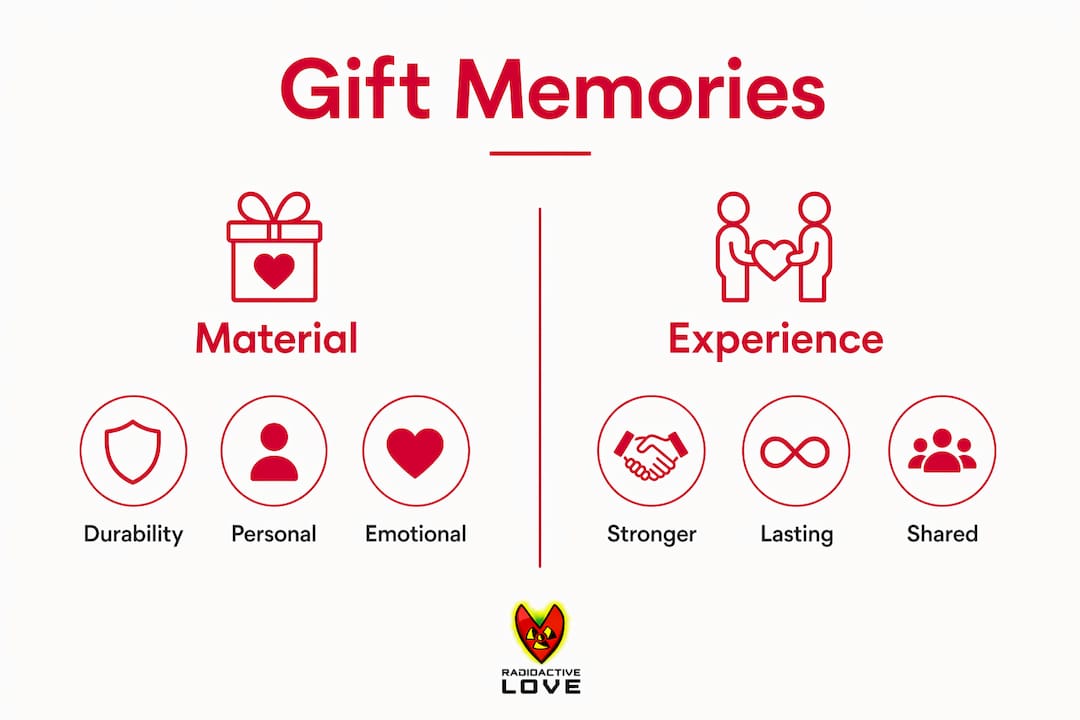
Shared experiences, such as concerts, theatre performances, or travel, create memories that couples carry for life. The emotional impact comes from the shared nature of the event: both partners encode the same memory, which then becomes a reference point in the relationship’s story.
| Gift type | Memory durability | Emotional engagement | Personalisation potential |
|---|---|---|---|
| Pure experience (concert, trip) | Very high | Very high | Moderate |
| Material gift with experiential soul | High | High | Very high |
| Generic material gift | Low | Low | Low |
| Gift card | Very low | Very low | Very low |
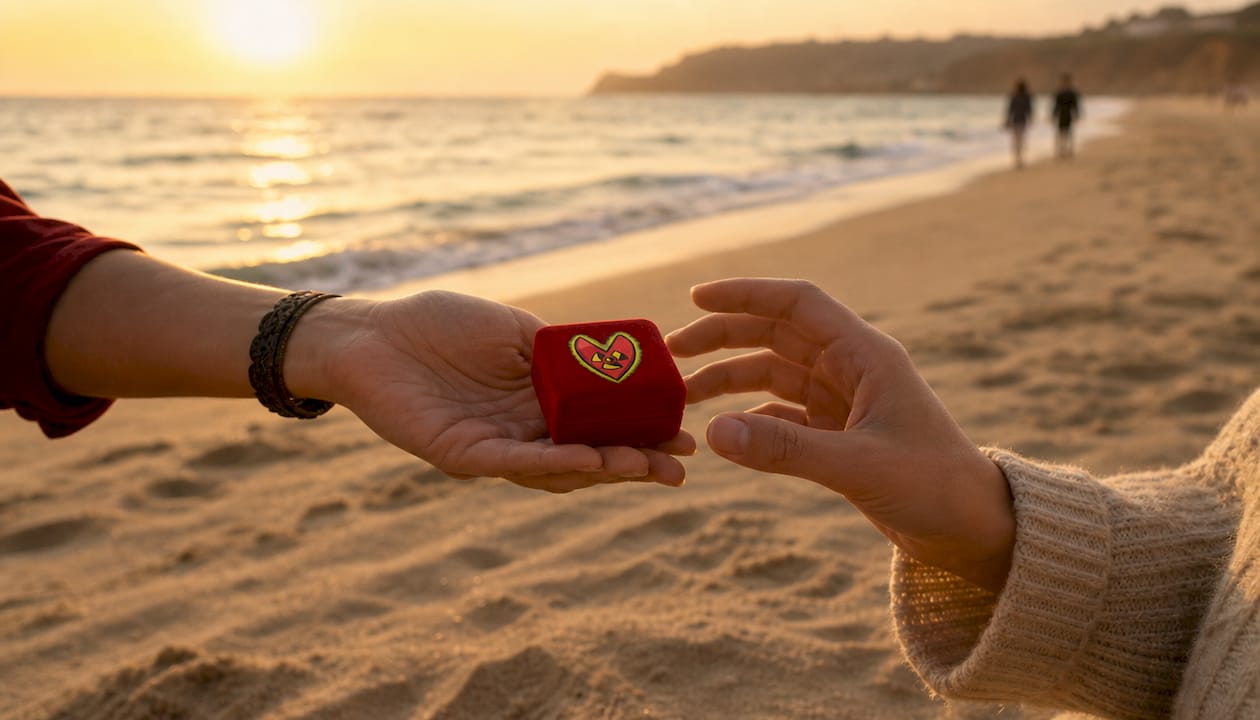
Material gifts with experiential qualities close much of the gap with pure experiences. Items with an experiential soul trigger emotional moments repeatedly, each time the object is used or seen. A 3D pop-up cherry blossom greeting card that surprises on opening, or a warm crystal night light that creates atmosphere nightly, functions more like an experience than a static object. The gift becomes a recurring emotional event rather than a one-time transaction.
Gift cards sit at the opposite end of this spectrum. Up to 19% of gift card value goes unredeemed, which means a significant portion of the gesture never produces any emotional moment at all. The absence of personalisation and the lack of a shared experience make them the weakest option for creating lasting memories.
Key takeaways
Romantic gifts create lasting memories when they generate repeated emotional experiences, signal genuine commitment, and reflect personal knowledge of the recipient rather than financial outlay.
| Point | Details |
|---|---|
| Emotion during use matters most | Gifts that produce feelings repeatedly over time build stronger bonds than those admired once. |
| Price does not equal meaning | 87% of people find inexpensive gifts as meaningful as expensive ones when thoughtfulness is present. |
| Personalisation beats cost | The “gift gap” shows givers overvalue price; recipients value attention and effort far more. |
| Gifting signals commitment | Frequent, thoughtful gifting communicates active choice in a relationship, not obligation. |
| Experiential gifts last longer | Experience-based gifts generate up to 25% more lasting satisfaction than generic material gifts. |
What I’ve learned from watching couples get gifting wrong
Most couples I’ve observed make the same mistake: they treat gift-giving as a transaction to complete rather than a signal to send. They spend more than they need to, choose something impressive rather than something personal, and then wonder why the gesture fades quickly from memory.
The research backs up what I’ve seen firsthand. Gift giving signals attention and investment, and that signal is a stronger predictor of relationship wellbeing than the monetary value of the object. The couples who get this right are the ones who treat gifting as a practice, not an event. They give small, thoughtful things regularly. They reference shared memories. They choose gifts that will be seen, used, or felt again and again.
The uncomfortable truth is that a gift chosen in ten minutes from a generic catalogue, regardless of its price, communicates exactly that: ten minutes of thought. A handcrafted item, a personalised keepsake, or a gift tied to a specific memory communicates something entirely different. It says: I know you, I thought about you, and I chose this for you specifically. That is the message that creates lasting memories, and no price tag can manufacture it.
— Aiden
Gifts from Radioactivelove that become lasting memories
Radioactivelove builds gifts around the principle that emotional resonance matters more than price. Their 3D Crystal Ball Video Player encapsulates cherished video memories inside a physical object, combining the durability of a keepsake with the emotional depth of a shared experience. It is the kind of gift that produces a feeling every time it is picked up.
For couples who want something handcrafted and personal, the preserved flower box and the handmade crocheted mini potted flower ornament offer lasting beauty without the impermanence of fresh flowers. Each piece is designed to sit in a partner’s space and generate warmth daily. Radioactivelove’s full collection of romantic couple gifts is built around this same idea: gifts that do not just impress once, but create emotional moments that couples return to.
FAQ
Why do romantic gifts create stronger memories than everyday gifts?
Romantic gifts carry emotional weight because they signal active choice and personal attention. The emotional intensity generated during use, not just at unwrapping, is what encodes the memory deeply.
Does the price of a romantic gift affect how meaningful it feels?
Research shows that 87% of people find inexpensive gifts as meaningful as expensive ones when thoughtfulness is present. Spending more does not increase gratitude or emotional impact.
What makes an experience-based gift better for creating memories?
Experience-based gifts produce up to 25% more lasting satisfaction than material gifts due to rosy retrospection, where positive memories of shared experiences improve over time rather than fading.
How often should couples give romantic gifts to strengthen their bond?
Frequent gifting signals sustained commitment rather than obligation. Regular small, thoughtful gifts build a stronger relational signal than infrequent grand gestures.
What is the “gift gap” in romantic relationships?
The gift gap is the documented tendency for givers to overestimate how much price matters and underestimate how much recipients value personalisation and thoughtfulness over cost.