

Best physical gifts for missing someone: comfort that lasts
The best physical gifts for missing someone fall into five clear categories: personalised blankets, memorial jewellery, curated care packages, comforting food gifts, and memory keepsakes. Each works because it gives the recipient something tangible to hold, wear, or use when words fall short. The most effective options share one quality: they acknowledge the absence honestly rather than trying to paper over it.
Here is a quick look at the gift types that consistently land well:
- Personalised photo blankets — soft, wearable comfort that keeps a loved one’s image close
- Memorial jewellery — lockets, pendants, and fingerprint pieces that become daily rituals of remembrance
- Curated care packages — low-effort bundles of self-care items, snacks, and comfort products
- Food and consumable gifts — teas, chocolates, or meal deliveries that nourish without demanding anything in return
- Memory keepsakes — photo albums, crystal video players, and flip books that preserve shared moments in physical form
Personalisation is what separates a gift that gets used from one that sits in a drawer. A blanket with a photo, a locket with a fingerprint, a care box with a handwritten note referencing a shared memory — these details tell the recipient that someone paid attention. The goal is always comfort without pressure: the gift should be ready to use the moment it arrives, with no assembly, no decisions, and no emotional homework required.
What are the best physical gifts for missing someone?
Soft textiles are the most instinctively comforting physical gifts you can send. A personalised photo blanket works the way a card never can: it wraps around the recipient, it stays warm, and the image on it does not fade after a week. Grief counsellors often describe this category as “physical presence by proxy,” and that framing is accurate.
The two main fabric options each suit different situations:
- Sherpa-backed fleece — one side is silky mink-style fleece, the other is cloud-soft sherpa, roughly 1 cm thick. Best for cold climates or anyone who runs cold.
- Double-sided fleece — lighter at about 0.6 cm, breathable, and comfortable year-round. Better for warmer regions or people with sensory sensitivities to heavy textures.
Personalisation options go beyond printing a photo. Many makers let you add a custom sign-off (“Love always, Sarah” or “From your daughter who misses you”), which turns the blanket into a letter the recipient can hold. For long-distance comfort, blankets that incorporate names, locations, or a short message have become one of the most frequently gifted items in this category, with thousands describing them as the closest thing to a hug from home.
Pro Tip: If you do not know the recipient’s climate or fabric preferences, choose double-sided fleece. It works in every season and tends to feel less overwhelming for people who are already emotionally raw.
When choosing a blanket for someone in grief, keep the imagery gentle. A favourite photo of the two of you together, or a landscape that meant something to the person who passed, lands better than a large collage that can feel visually chaotic during a hard moment.
How does memorial jewellery help someone carry a memory?
Wearable keepsakes occupy a different emotional space than blankets. They go everywhere the recipient goes, which is exactly the point. A locket or pendant becomes a small, private ritual: touching it during a difficult meeting, holding it during a prayer, or simply knowing it is there.
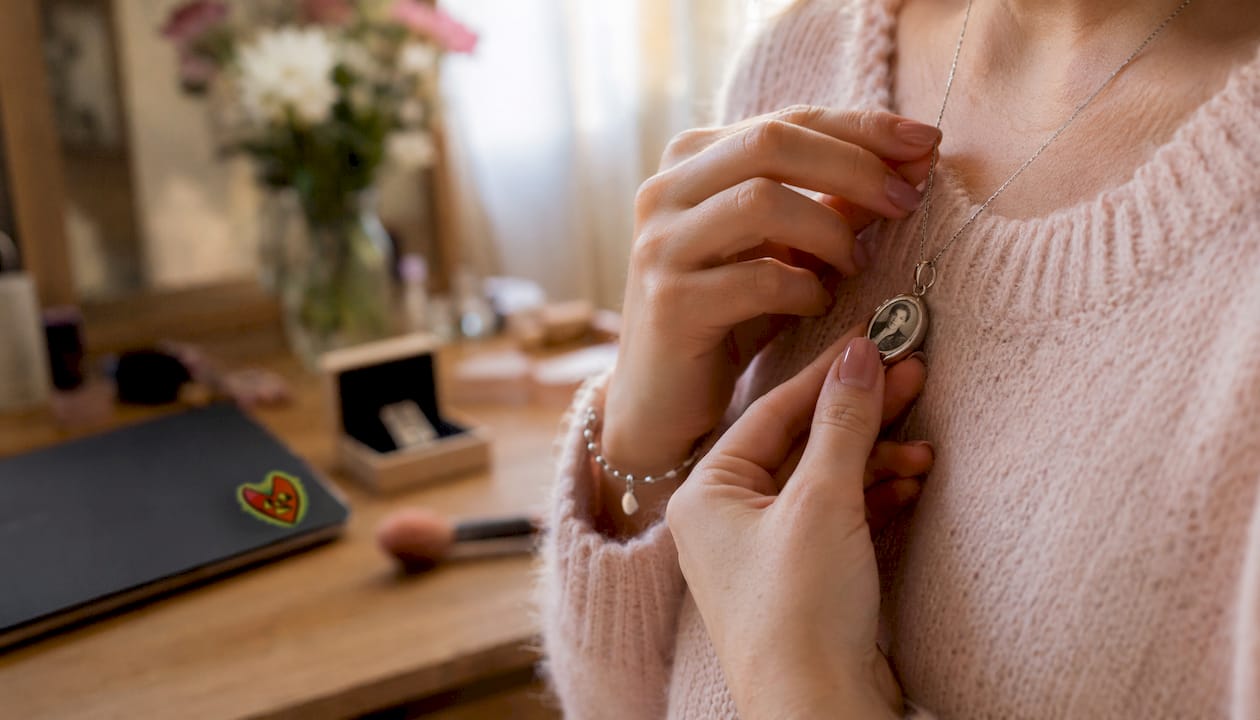
The options within this category have expanded considerably. A memorial locket can now hold a photo, a birthstone charm, and a choice from over 50 “In Memory Of” charms, all in a stainless steel or sterling silver setting with a secure magnetic closure. Pendant sizes around 23x19mm are standard, which is large enough to feel substantial but small enough for everyday wear.
For something more intimate, fingerprint jewellery uses precision laser engraving to permanently etch a print onto the piece. The engraving does not fade with normal wear, and many makers work with archived or scanned fingerprints from loved ones who have already passed, since funeral homes and hospitals often keep these on file. Self-fill kits are also available for those who want to add a small amount of ashes, hair, or fur at home, on their own timeline.
Key personalisation choices to consider:
- Engraving — name, date, or a short phrase on the back of the pendant
- Birthstone — the loved one’s birth month stone adds colour and specificity
- Fingerprint or handwriting — the most personal option, requiring a photo or scan
- Photo charm — a small image sealed inside the locket, visible through the front
One practical note: quality memorial jewellery is designed for daily wear, but most makers recommend removing it before swimming, showering, or using cleaning products to preserve the finish.
What should a thoughtful care package include?
A well-built care package does something a single gift rarely manages: it fills an afternoon. The recipient opens it, discovers several small things, and spends time with each one. That extended engagement is part of the comfort, and it requires no energy or decision-making on their part.
The best care packages for grief acknowledge difficulty without forcing optimism. Avoid anything that implies the recipient should feel better soon. Instead, build around items that simply make the next few hours a little softer:
- A quality loose-leaf tea or a selection of herbal blends
- A scented candle (choose a calm, grounding scent like sandalwood or lavender rather than something festive)
- A soft eye mask or weighted eye pillow for rest
- A small journal or a set of affirmation cards
- A comfort snack: good chocolate, shortbread, or a favourite treat you know they love
- A handwritten note that names what they are going through, without trying to resolve it
The note is the most important element. A line like “I know there are no words, and I’m not trying to find them. I just want you to know I’m here” does more than any product in the box. Reducing the recipient’s burden is the underlying principle: every item should be ready to use immediately, with nothing to assemble, charge, or figure out.
Why are food gifts so effective for someone grieving?
Food is one of the oldest expressions of care across every culture, and it works precisely because it asks nothing of the recipient. They do not have to display it, maintain it, or feel a particular way about it. They just eat it, and for a moment, someone else has taken care of them.
The most effective consumable gifts for grief and longing:
- Premium tea or coffee — a ritual that structures the day and offers a quiet moment
- Good chocolate — dark chocolate in particular has a long association with comfort, and a beautiful box feels like an occasion
- Meal delivery credit — practical, zero-effort, and genuinely useful when cooking feels impossible
- Baked goods by post — brownies, shortbread, or cookies sent in a letterbox-friendly box feel personal without being overwhelming
Two cautions worth keeping in mind. Always check for dietary restrictions or allergies before sending food, particularly if you are not close to the recipient. And be thoughtful about cultural context: food carries deep meaning in many traditions, and certain items may be associated with mourning rituals in ways that could feel uncomfortable. When in doubt, a neutral, high-quality tea or a simple chocolate assortment is almost universally welcome.
Which gifts work best when you are supporting someone from a distance?
Physical gifts for long distance need to clear one extra bar: they have to arrive intact, feel personal despite the miles, and require zero effort to enjoy. The packaging matters more than people expect. A gift that arrives crumpled or in a plain brown box loses some of its emotional weight before it is even opened.
The strongest options for long-distance support:
- Personalised blankets — ship flat, arrive ready to use, and carry the sender’s image or message
- Photo albums or memory books — a curated collection of shared photos, captioned by hand, that the recipient can return to whenever they want
- Video-enhanced keepsakes — items like a 3D Crystal Ball Video Player from Radioactivelove, which plays a video message inside a glass orb, combine the tactile with the personal in a way a card or digital message cannot replicate
- Letterbox-friendly food gifts — designed to fit through a standard mail slot, so the recipient does not have to be home to receive them
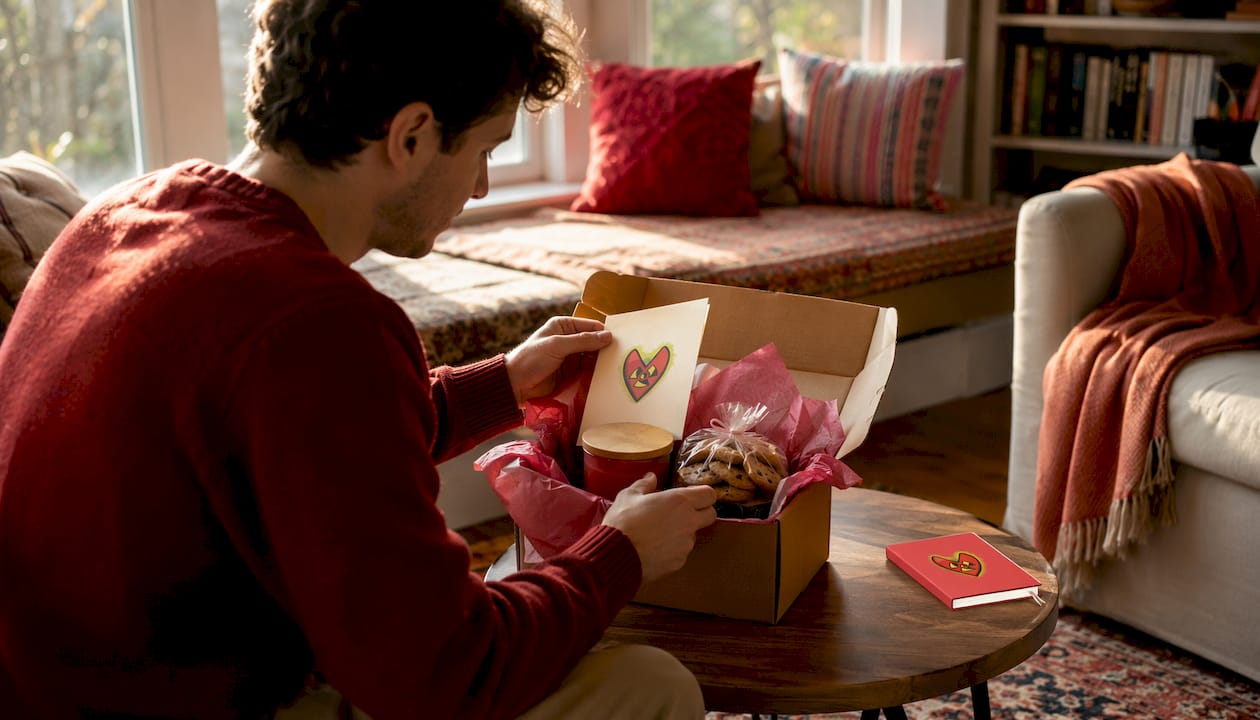
For packaging, include a handwritten card inside the box rather than relying on a printed message slip. Tissue paper and a simple ribbon add almost nothing to the cost but signal that someone took time. If you are sending across provinces or internationally, check delivery timelines carefully: a gift that arrives three weeks after the hardest moment has passed still matters, but one that arrives within days of a loss or a difficult anniversary lands with far more impact.
Pro Tip: When sending a gift from afar, text the recipient to let them know something is coming. It gives them something to look forward to, and it means the gift will not sit on a doorstep or be missed.
What gifts should you avoid giving someone who is grieving?
The most common gifting mistakes in this context share a root cause: they prioritise the giver’s comfort over the recipient’s. A gift that says “I hope you feel better soon” is really about wanting the grief to be over. A gift that requires assembly, upkeep, or a thank-you note adds to an already heavy load.
Specific things to avoid:
- Plants or flowers that need care — a grieving person should not have to water anything
- Overly cheerful messaging — “You’ve got this!” or “Brighter days ahead!” can feel dismissive of real pain
- Large, permanent memorials ordered without asking — a custom garden stone or engraved bench is a significant decision; start with subtle, non-permanent tokens and let the recipient guide what comes next
- Gifts requiring assembly or charging — anything with instructions is the wrong call
- Generic sympathy baskets — a basket of random items with no personal connection signals that you grabbed something without thinking
Timing also matters more than most people realise. The first week after a loss is often flooded with attention; the third and fourth weeks, when everyone else has moved on, are frequently the loneliest. A gift sent six weeks after a loss, with a note that says “I’m still thinking of you,” can be more meaningful than anything sent in the immediate aftermath. Grief does not follow a schedule, and neither should your support.
How do you make a gift genuinely meaningful and supportive?
The most meaningful gifts acknowledge grief openly rather than trying to sidestep it. Experts in grief support consistently point to the same principle: presence and recognition matter more than solutions. A gift that says “I see what you are carrying” does more than one that says “Here is something to cheer you up.”
Specificity is the fastest way to get there. A blanket with a photo of the two of them at a place they loved together is not the same as a blanket with a generic floral print. A locket with her grandmother’s birthstone is not the same as a locket with a random gemstone. Gifts with personal references build emotional resonance that generic sympathy products simply cannot reach. If you know a shared memory, an inside reference, or a detail about the person who is missed, use it.
Practical advice from grief counsellors and gift experts:
- Reduce effort at every step — the gift should be usable the moment it is unwrapped, with nothing required of the recipient
- Name the loss in your note — say the person’s name, acknowledge what happened, and resist the urge to find a silver lining
- Think beyond the first week — a thoughtful gift for loneliness sent weeks or months later often lands harder than one sent immediately
- Match the gift to the relationship — a close friend can go deeper and more personal than a colleague; calibrate accordingly
Pro Tip: Consistency beats grand gestures. A small check-in every few weeks, whether a text, a card, or a modest gift, provides more sustained comfort than one large gesture followed by silence. Ongoing small acts of support are what people remember a year later.
The Radioactivelove Custom Photo Flip Book is one example of a gift that earns its place on this list. It is hand-cranked, lit from within, and built around photos the giver selects. The recipient does not need to do anything except turn the handle. That combination of personalisation and zero effort is exactly what the research points to as most effective.
When you are ready to send something that goes beyond a card or a generic basket, Radioactivelove’s collection of personalised memory gifts, including the 3D Crystal Ball Video Player and the Custom Photo Flip Book, gives you a way to put a real memory into someone’s hands. These are gifts designed for exactly this moment: when distance or loss makes presence impossible, and you want to send something that actually feels like you.
Key takeaways
The most effective physical gifts for someone missing a loved one combine zero-effort usability, genuine personalisation, and honest acknowledgement of grief rather than attempts to resolve it.
| Point | Details |
|---|---|
| Personalisation drives impact | Gifts referencing shared memories or specific details comfort far more than generic sympathy products. |
| Zero effort is non-negotiable | Grieving recipients should not have to assemble, charge, or maintain anything; ready-to-use gifts are kinder. |
| Timing extends beyond the first week | A gift sent weeks or months after a loss often lands harder than one sent in the immediate aftermath. |
| Start subtle with memorials | Non-permanent keepsakes let recipients engage with remembrance on their own timeline, without pressure. |
| Consistency outperforms grand gestures | Small, ongoing check-ins and modest gifts provide more sustained support than a single large gesture. |