

How to avoid generic gift giving: a 2026 guide
Generic gifts fail not because they are cheap, but because they are forgettable. The fix is to stop shopping by occasion and start shopping by person, grounding every choice in specific observation, honest timing, and a personal note that does as much work as the gift itself.
Table of Contents
- Core principles for avoiding generic gift giving
- How do you identify your partner’s unique traits for personalised gifting?
- Timing and preparation strategies that make gifts feel authentic
- How to craft a gift presentation that deepens meaning
- Creative DIY gift ideas that add genuine personal touch
- How to customise gifts to reflect personality or life milestones
- Why personalisation is the real language of romantic love
- Radioactivelove turns a memory into something you can hold
- Key takeaways
Core principles for avoiding generic gift giving
Thoughtful gift giving starts with a shift in perspective. Shopping by person rather than by occasion is the single most effective change you can make. Instead of asking “what do people buy for anniversaries?” ask “what has my partner mentioned wanting lately?”
- Define the recipient specifically. “Loves cooking” is too broad. “Experiments with fermentation and complains her starter jars take up the whole fridge” is a gift brief.
- Emotional value beats price. A lower-cost item referencing an inside joke or a specific problem consistently outperforms a high-cost generic gift.
- Allow real lead time. Rushed shopping produces generic gifts almost every time. Give yourself more time than you think you need.
- Balance practical and sentimental. A gift that solves a real problem while carrying emotional weight lands harder than one that is purely decorative.
- Never skip the card. The personal note anchors the gift’s meaning. Two or three sentences explaining why you chose it do more than almost any upgrade to the gift itself.
How do you identify your partner’s unique traits for personalised gifting?
The best gifts come from paying attention long before any occasion arrives. People tell you what they want constantly. They just do not frame it as a request. “I keep meaning to get a decent chef’s knife” is a gift idea hiding in ordinary conversation.
- Go beyond broad categories. “Likes art” tells you nothing useful. “Keeps a sketchbook in her bag and always stops at street murals” tells you everything.
- Keep a running note. Maintaining a note on your phone per person, updated whenever something useful comes up, turns gift buying from stressful guesswork into easy retrieval.
- Mine shared memories. Private jokes, a trip that went sideways, the restaurant where you had your first argument and laughed about it after. These details make a gift unrepeatable.
- Avoid gender stereotypes. Defaulting to “gifts for him” or “gifts for her” sections is exactly how you end up with a polo shirt nobody wanted. Shop for the individual, not the demographic.
- Ask directly. Most people appreciate being asked what they want. “I want to get you something you’ll actually love. Any ideas?” is warm, not lazy.
Pro Tip: Apply the five-person rule before you commit. If the gift idea could fit five other people you know, keep looking. A truly personal gift feels chosen for that one person and nobody else.
Timing and preparation strategies that make gifts feel authentic
Starting early is not about being organised for its own sake. It is about giving yourself the mental space to make a genuinely good choice rather than a convenient one.
- Start at least a month out for major occasions. Reviewing your notes with fresh eyes usually surfaces one or two ideas immediately.
- Revisit your observations. The note you made three months ago about her mentioning a specific author she wanted to read is more valuable than anything a gift guide will suggest.
- Planning removes the transactional feeling. When a gift is rushed, the recipient can often sense it. The thought behind it feels thin.
- Set calendar reminders. A reminder six weeks before a birthday costs nothing and eliminates the scramble entirely.
- Budget within comfort. Overspending creates stress for you and, in close relationships, can subtly pressure the recipient. Spend what is genuinely comfortable, then invest your energy in the selection.
How to craft a gift presentation that deepens meaning
A gift’s presentation is not decoration. It is part of the message.
- Write a handwritten note. Not a signature. A few sentences about why you chose this specific thing, what it reminded you of, or what it means about your relationship. Expert gift strategists consistently point to the card as the most overlooked element of the entire gift.
- Tell the story of the gift. Where did the idea come from? What conversation sparked it? Sharing that context turns an object into a memory.
- Blend practical and sentimental. Practical gifts that solve a known, specific problem prove you pay attention. That attentiveness is the sentimental element. A beautiful cast iron skillet for someone who cooks every night is not boring. It is exactly right.
- Use packaging with intention. Thoughtful wrapping signals care before the gift is even seen. It does not need to be elaborate. It needs to feel considered.
Pro Tip: Small, specific details do the heavy lifting. A mug with the skyline of the city where you met is personal. The same mug with a generic motivational quote is not. The object is almost identical. The specificity is everything.
Creative DIY gift ideas that add genuine personal touch
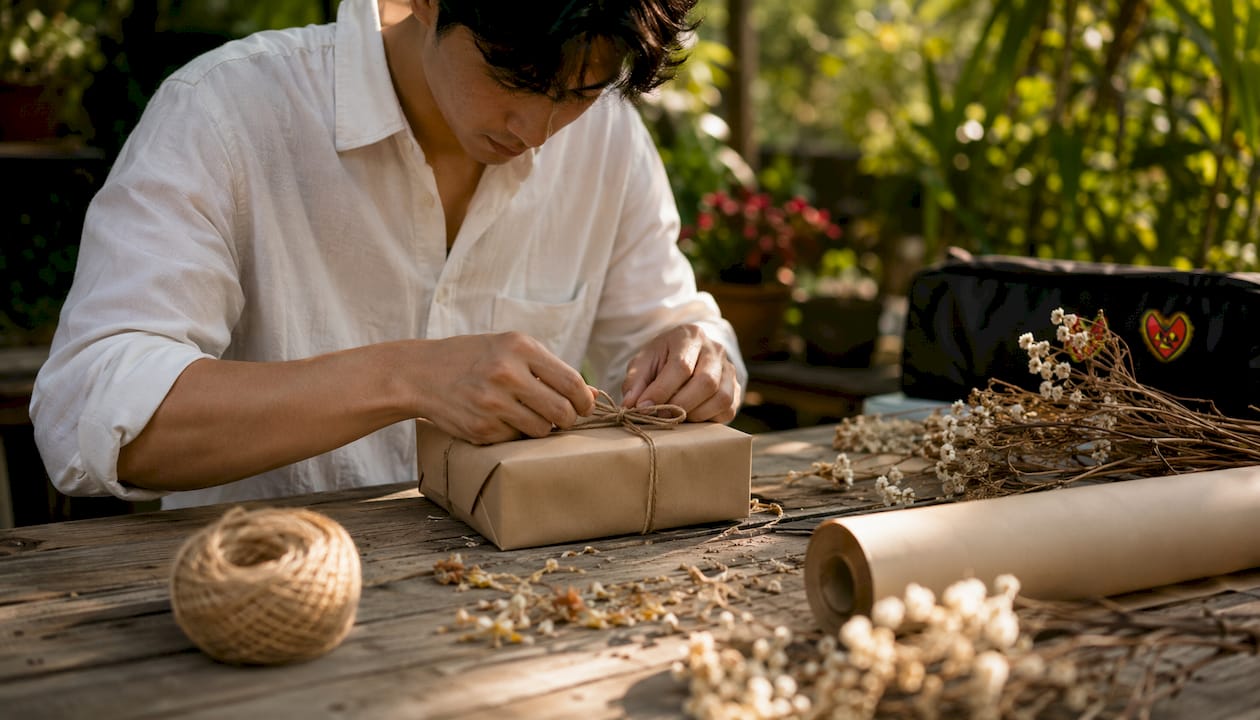
Handmade gifts carry weight when they reflect the recipient’s actual taste, not just your effort. A hand-lettered print of a phrase that means something only to the two of you, a custom photo book built around a single trip or year, a playlist burned to a USB with a note explaining each song. These work because they are impossible to mass-produce. Nobody else could receive this exact item and have it mean the same thing.
For thoughtful gift giving that goes beyond store shelves, consider a scrapbook of screenshots from your earliest messages, a framed map of a place that matters to your relationship, or a hand-assembled kit around a specific hobby they have mentioned wanting to explore. The DIY element signals time and attention. What makes it land, though, is the specificity underneath it.
How to customise gifts to reflect personality or life milestones
Customisation works when the detail unlocks a memory rather than just stating a fact. “Est. 2021” on a print is fine. The exact coordinates of where you got engaged is personal. The difference is whether the detail means something or simply fills space.
Match the gift to where your partner actually is in life. A milestone birthday calls for something that acknowledges the chapter closing and the one opening. An anniversary gift lands harder when it references something specific from that year, not just the number of years. For gifts tied to shared memories, the most effective approach is to anchor the customisation to a real moment: a date, a place, a phrase, a photograph that carries genuine weight.
Colours and aesthetics matter more than most givers admit. If her entire home is warm neutrals and botanicals, a neon novelty item will feel off even if the sentiment is right. Pay attention to how your partner decorates, what they wear, what their world actually looks like. Matching their aesthetic shows you notice them in the details.
For occasion-specific ideas, Valentine’s Day gift guides that focus on practical yet meaningful choices are worth browsing for inspiration, as long as you filter every idea through your partner’s specific life rather than accepting the suggestion wholesale.
Why personalisation is the real language of romantic love
Generic gifts feel transactional because they are. They say “I fulfilled the obligation.” A deeply personal gift says something harder to fake: “I have been paying attention to who you actually are.”
Gifts that tell a story and incorporate vulnerability deepen emotional bonds in a way that safe, expensive objects simply cannot. Referencing a shared memory or a private joke requires you to be known by the other person. Receiving that kind of gift confirms you are. That confirmation is what makes people cry opening a $30 present while feeling nothing about a $200 one.
The most effective romantic gifts are not grand gestures. They are specific ones. The “how did you know?” moment of recognition comes from noticing things your partner mentioned once, months ago, and acting on it. That is not a personality trait. It is a practice.
Radioactivelove turns a memory into something you can hold
Most personalised gifts ask you to upload a photo and pick a font. Radioactivelove goes further. The 3D Crystal Ball Video Player encapsulates a video or photo inside a glass ball that plays on loop, turning a shared memory into a physical object your partner can keep on their desk or nightstand. It is the kind of gift that creates the “how did you know?” moment this article is built around.
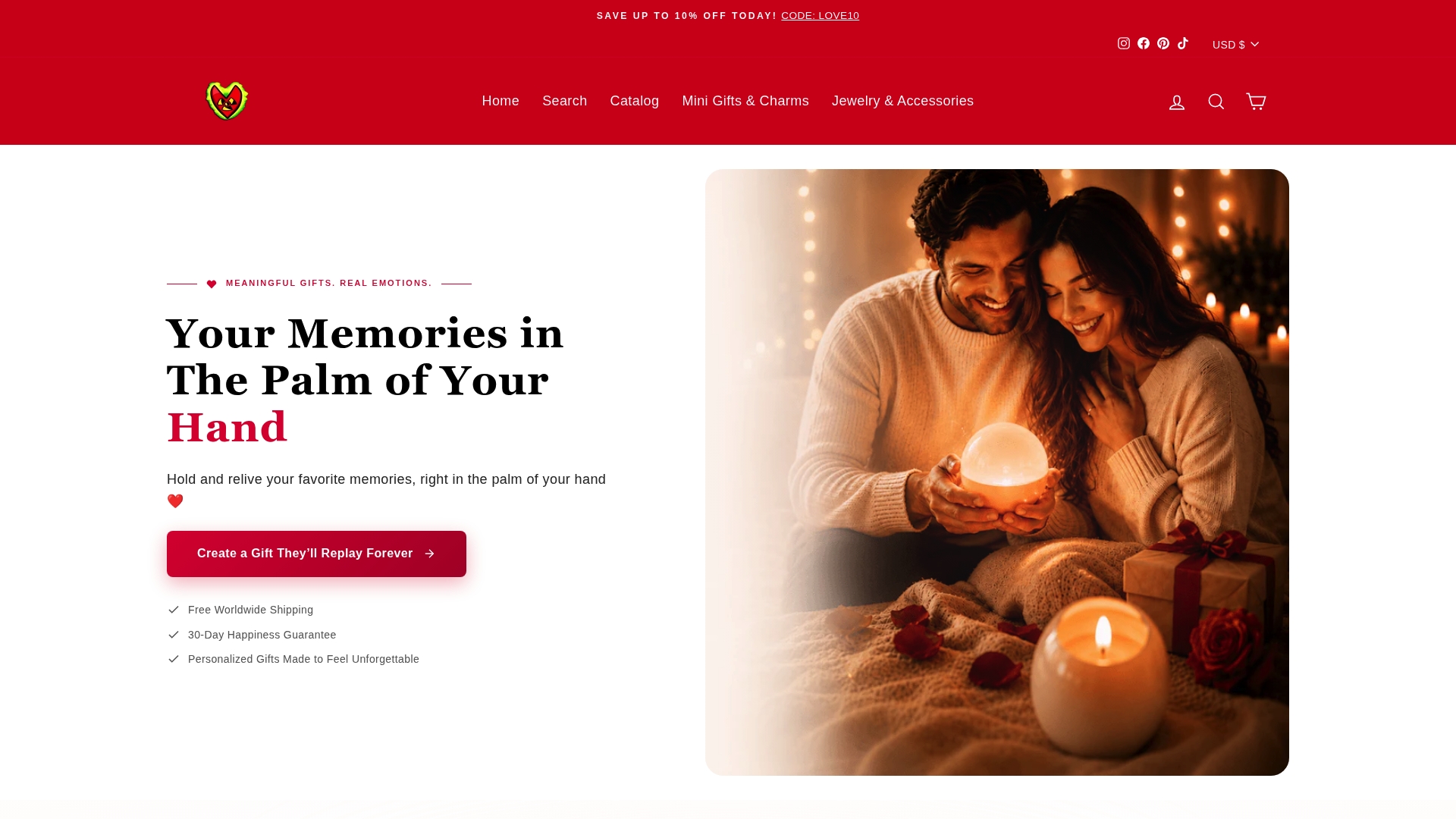
For couples who want something tactile and story-driven, the Custom Photo Flip Book animates your photos through a hand-cranked wooden frame, making the act of looking at memories feel like an event. Every product Radioactivelove offers is built around the same idea: a gift should be an extension of your relationship, not a placeholder for one. Browse the full collection at Radioactivelove and find the one that fits your story.
Key takeaways
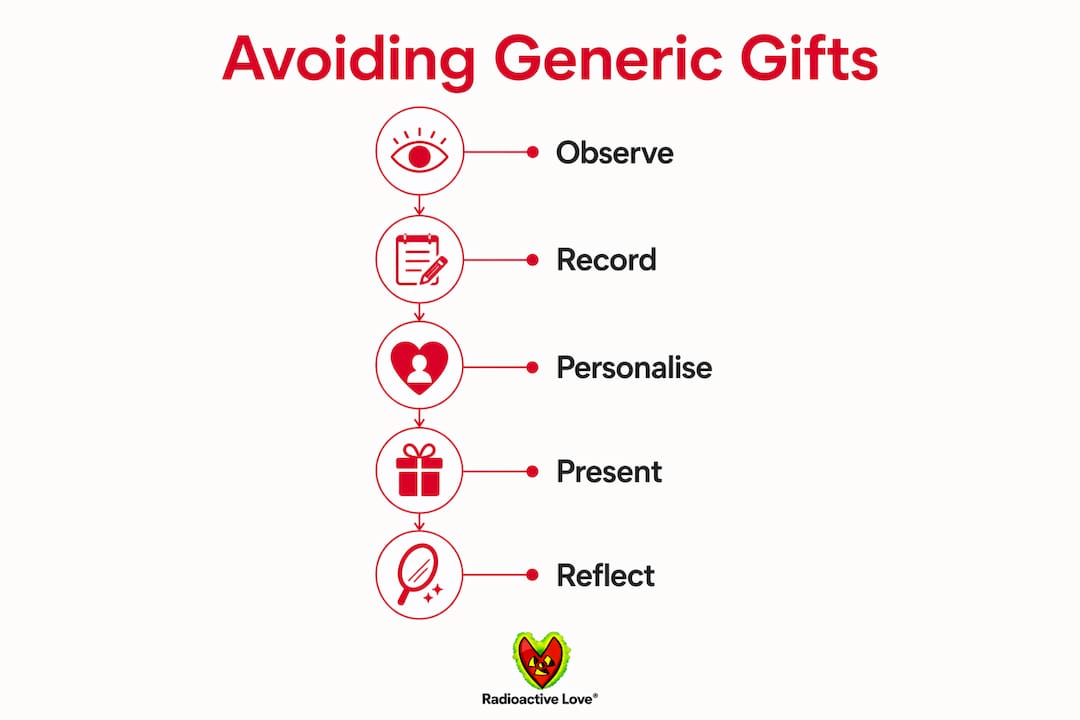
Avoiding generic gift giving comes down to one habit: observe your partner specifically, record what you notice, and give yourself enough time to act on it.
| Point | Details |
|---|---|
| Shop by person, not occasion | Define the recipient by specific habits and conversations, not broad categories like “loves travel.” |
| Emotional value outweighs price | A lower-cost gift referencing an inside joke consistently outperforms a high-cost generic one. |
| Lead time changes everything | Rushed shopping produces generic gifts; starting a month out gives you space to make a genuinely good choice. |
| The card is not optional | A handwritten note explaining why you chose the gift does more for the recipient than almost any upgrade to the gift itself. |
| Radioactivelove for memory-based gifts | The 3D Crystal Ball Video Player and Custom Photo Flip Book turn shared memories into physical keepsakes, not generic objects. |